Health
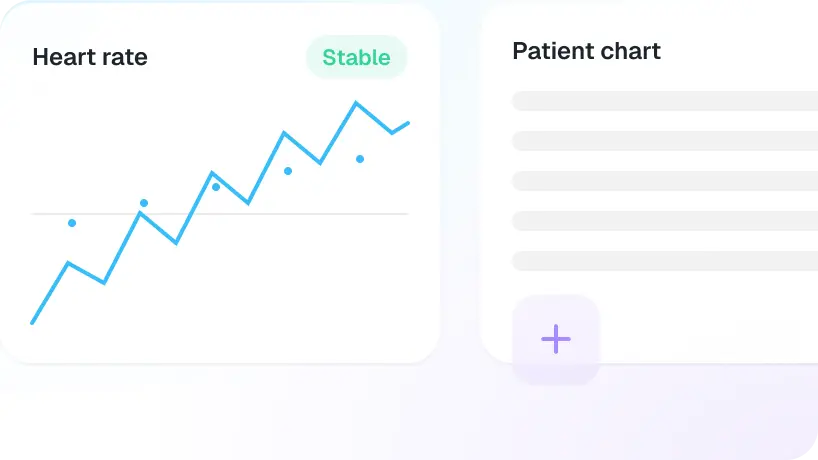
Clinical documentation, patient intake, maternal health, public health and frontline care.
Sahara CodeSwitch Africa Challenge
Build voice models that understand code-switching, local accents, and real-world noise.
invites developers, startups, researchers, product teams, and builders across Africa to help solve one of the biggest unsolved problems in voice AI. Use Sahara’s new code-switching APIs. Build real applications. Benchmark what works. Help surface how well current speech models handle code-switched audio in real-world settings.
Create or improve a real-world voice AI application
The transcript received can be used to perform a downstream task. Examples include a voice assistant that completes a booking, a voice-driven triage tool, a spoken-language form-filler, or a voice interface that takes an action on a user’s behalf.
Each submission must:
Five tracks designed for real-world impact across Africa.
Clinical documentation, patient intake, community health, maternal health, public health, hospital workflows, and frontline care.
Court transcription, legal aid, citizen services, civic reporting, complaints, justice access, and public-sector workflows.
Voice banking, KYC, payments, collections, customer support, call centers, agent assist, and customer insights.
Farmer advisory, extension services, tutoring, classroom learning, local-language education, and skills training.
Humanitarian response, accessibility, media, religious services, commerce, transport, culture, and any meaningful use of code-switching voice AI.
Clinical documentation, patient intake, maternal health, public health and frontline care.
Court transcription, legal aid, citizen services, complaints and justice-access workflows.
Voice banking, KYC, payments, collections, call centres and customer support.
Farmer advisory, tutoring, classroom learning, local-language education and skills training.
Accessibility, media, commerce, transport, culture and meaningful code-switching applications.
In August, Intron is releasing Sahara v2.5 in beta (research preview), focused on bilingual code-switching across 12 African language pairs.
Start with the research-preview tools and support needed to create bilingual African speech experiences.
Code-switching API access for participant prototypes and integrated applications.
Built around bilingual code-switching across African languages.
Guidance that helps teams get set up and begin building confidently.
Train, test and understand natural code-switching with open general-purpose and medical speech datasets.
Africa’s most diverse natural code-switching dataset.
Africa’s first medical code-switching dataset.
A Yoruba–English code-switching dataset developed by LyngualLabs.
Use Intron’s guidance to evaluate model performance and present results in a consistent, reviewable way.
Evaluate multilingual and code-switching performance.
Use shared methods to compare model results fairly.
Communicate findings clearly for technical review.
Strong teams can continue learning, presenting and connecting beyond the core build period.
Technical support to help teams make effective use of the release.
Access to present solutions and connect with the partner ecosystem.
An additional learning opportunity organized by NVIDIA.
Applications are open to builders across Africa and the diaspora. Apply as a solo builder or as a team. We especially encourage:
Bonus points will be given to solutions addressing a real problem for a meaningful population size.
Submissions can include fresh ideas, production apps, apps close to deployment, etc clearly designed for real world use.
You can apply as an individual or as a team.
Teams may include developers, researchers, designers, domain experts, product managers, linguists, clinicians, customer-support operators, field workers, or anyone who understands the problem you are solving.
Recommended team size: 2–5 people.
Keep it concise. Focus on impact, execution, and responsible use.
A short description of the problem and your proposed solution.
A short video demo of a working prototype or integrated application.
Code or technical documentation for your implementation.
Comparing Sahara against at least three other speech models.
A note on privacy, consent, safety, and responsible data use.
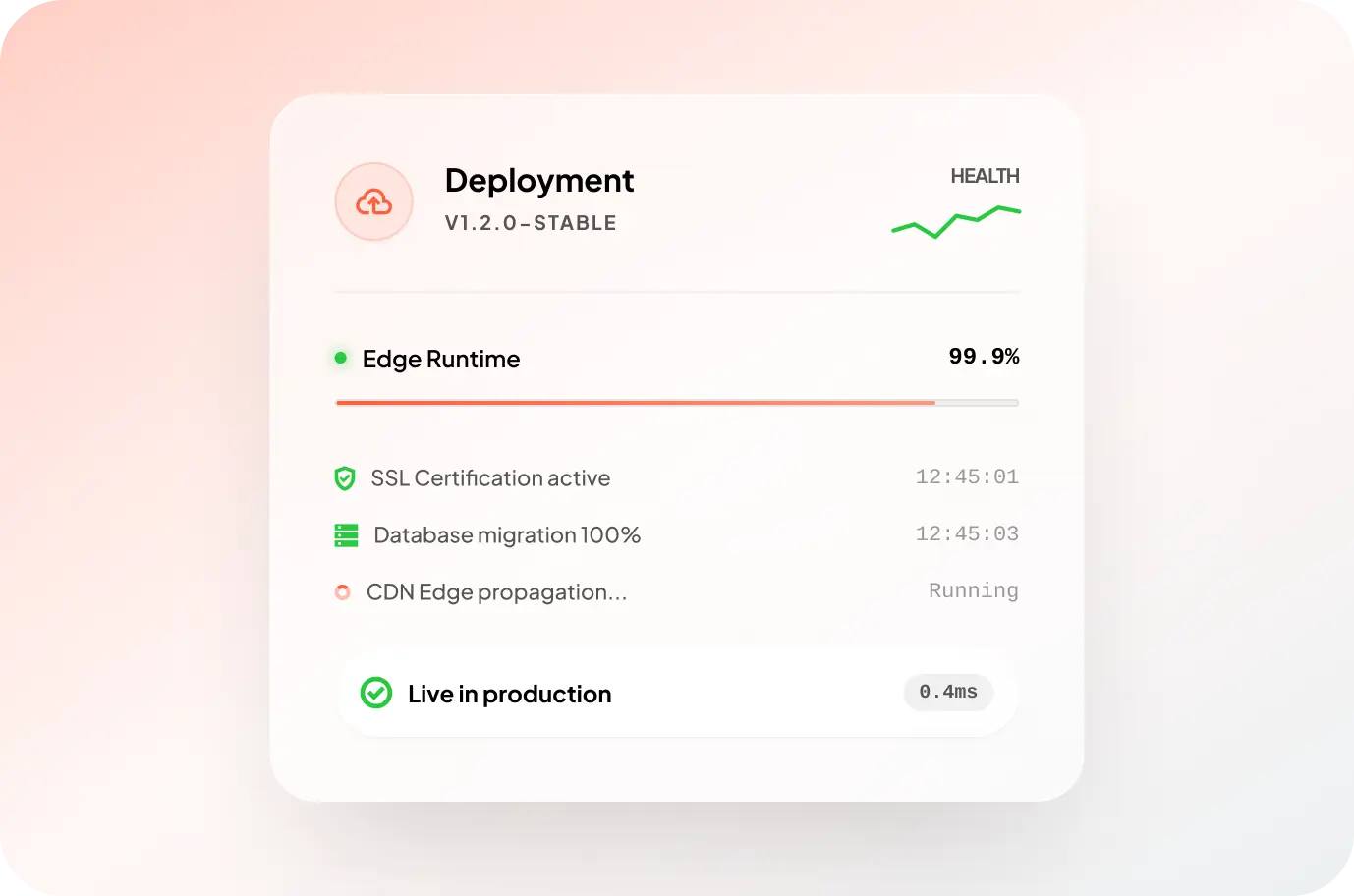
Deployment
v1.2.0 – Stable
Five dimensions evaluated by partners, sponsors, and technical experts.
Does it address a meaningful user need for a large target population?
Performance across multilingual environments and natural code-switching scenarios.
Usability, workflow fit and user trust in the final experience.
Reliability, integration, latency and robustness in real environments.
Consent, inclusion, privacy, bias and respect for user dignity.
A total cash prize pool plus non-cash opportunities for finalists.
Cash prizes will be awarded to top-performing solutions across the challenge categories.
Key milestones from launch to winner announcements.
Finalists will pitch live to challenge partners, judges, sponsors, funders, and ecosystem leaders.
This is where top teams can showcase their applications, share benchmark results, meet potential collaborators, and explore follow-on pilots, funding, incubation, or co-deployment opportunities.
Our judging panel will include leaders from AI research, African languages, fintech, health, public-interest technology, responsible AI, product deployment, and the startup ecosystem.
NVIDIA
Wema Bank
Wema Bank

ARM

Branch International

ESIEE Paris
Microsoft Research Africa
Audere
Helium Health

Helium Health

LSTM

CcHUB
Gooey

Microsoft Research Africa
alt="Felermino-Ali">
Microsoft Research Africa

alt="Kome-Sideso">
CcHUB Namibia
The Sahara CodeSwitch Africa Challenge is supported by organisations committed to building inclusive voice AI for Africa.
We are inviting selected partners to support the challenge in three ways.
Become a partner
Spread the challenge through your platforms, newsletters, communities, events, social channels, and developer networks.
Nominate judges per category to evaluate finalists through a technical, sector, language inclusion, responsible AI, product, or deployment-readiness lens.
Contribute from $1,000 to $20,000 to sponsor a named prize aligned with your mission or sector priority.
Intron’s core technology is speech recognition built for African accents. Intron has created Africa’s largest and most diverse speech dataset, supporting transcription across 700+ African accents, with over 6M+ audio clips contributed by more than 70,000 Africans across 13 countries.
In healthcare, the technology removes the barrier that keeps busy hospitals from digitising: manual keyboard entry. In the judiciary, it reduces the documentation burden on judges during hearings, preserving testimony integrity in an overburdened system. Intron’s Sahara models are in production with partners including Penda Health, ARM, Branch, Carbon, Data.FI, and State High Courts across Nigeria, Kenya, South Africa, and Eswatini.
Learn more at intron.io
Sahara v2.5 is Intron’s next-generation voice AI release, built around the world’s first bilingual code-switching support across 12 African language pairs, the first African trilingual model, and fluent speech generation in 12 African languages. It launches alongside this challenge in August 2026.
Follow Us
The Future of African Voice AI
Gain deep insights into the evolving technological landscape with our upcoming 2026 Africa Voice AI Report. The report explores the trends, challenges, and opportunities shaping the future of speech interfaces across the continent.